Showing posts with label About. Show all posts

Thursday, September 25, 2014

Met Chem Inc.

New filter presses, used filter presses, and custom filter presses for all your industrial filter press needs
Met-Chem was established in 1956 as a manufacturer’s representative for liquid filtration equipment with an in-house sewing department to manufacture replacement filter bags, cloths and media. 

Over the years, Met-Chem has acquired complimentary companies to add to our group of process equipment and replacement parts suppliers.  Met-Chem’s equipment manufacturing began with filter presses and clarifiers and gradually grew to include sludge dryers and complete waste treatment systems and component parts.

Their equipment has been used in a variety of industries from plating and metal finishing to chemical, food and beverage processing to name a few.  Met-Chem features heavy duty steel construction.  Using modern manufacturing processes, the equipment and systems can be tailored to your specific space and system needs. 

Call a Met-Chem representative for any of your filtration or wastewater treatment needs; Phone: 216-881-7900 or e-mail: info@metchem.com

Monday, March 17, 2014

About Lakeside Water Treatment

Reliable & Innovative Provider of Commercial and Industrial Water Treatment Systems

Commercial and Industrial Water Treatment EquipmentThey have established themselves as a reliable and innovative provider of commercial and industrial water treatment equipment throughout the world.

Their product offerings include water softeners, dealkalizers, demineralizers, filters, reverse osmosis, and condensate polishers. They incorporate other products such as forced air decarbonators, bulk brine silos, regeneration stations, chemical feed systems and neutralization systems, to provide a complete sole source water treatment package to the end user customer. Their technically trained sales and engineering staff, not only provide you with products, but also provide you with sizing and selection assistance in order to make sure that the equipment selected is the best choice for the project.


Lakeside Water Treatment Inc. was founded in 1990 by experienced water treatment professionals. They average over thirty years of industry experience per employee. At the same time the latest in CAD and computer networking technology is being utilized. Their engineering staff has evolved from the water treatment industry bringing together at one facility, the necessary process, controls and manufacturing expertise to produce the type of quality built equipment that you can trust to perform.

They are located on the northwest side of Milwaukee. Customers are welcome, at any time, to tour their facility and learn more about how Lakeside can assist their efforts.

Thursday, March 6, 2014

Molecular Sieve

Description:

4A molecular sieve is primarily used for removing moisture from liquefied gaseous materials. Advantages are consistent adsorption speed, higher contamination resistance, stronger crushing increasing cyclic times for extended product life.
4A molecular sieve has a pore size of 4A or 4 angstrom. Any molecule larger than 4A will not be able to be adsorbed. 4 Angstroms are the sodium forms of the Type A crystal structure. The sequence rate of adsorption is argon, krypton, xenon, ammonia, carbon monoxide, C2H4, C2H2, CH3OH, C2H5OH, CH3CN2, CS2, CH3CL, CH3Br, and carbon dioxide.
The advantages of our high quality 4A mole sieve are consistent adsorption speed, and higher contamination resistance, stronger crushing increasing cyclic times which provide an extended product life. 4A Molecular Sieve is primarily for removing moisture from liquefied and gaseous materials.

Applicaitons:

It has become one of the most reliable desiccants for a variety of applications including:
  • Refrigerant Drying
  • Moisture removal in PU Plastic or Paint
  • Natural Gas Drying
  • Drying Cracked Gas
  • Static drying of insulating glass units, whether air filled or gas-filled.
  • Dehydration of highly polar compounds, such as methanol and ethanol.
  • Dehydration of unsaturated hydrocarbons (e.g. ethylene, propylene, butadien).

Thursday, February 27, 2014

Why Evaporate?


Many years ago wastewater management was becoming a significant challenge for many companies. Water-based wastes were usually generated in the normal course of day-to-day business, and there were typically multiple waste streams that need disposal.
Prior to the arrival of evaporation, companies used disposal technologies that still tied them to sewer discharge, or were forced to have large volumes of wastewater hauled off-site. Both approaches, however, increased - and continue today to increase - a company's exposure to ever-tightening environmental regulations and their associated costs. Today, wastewater disposal is viewed by many as a problem that can impact a company - and its management - in terms of both cost and liability.
Samsco RunDry Wastewater Evaporator System
Consequently, like other management problems, the options for wastewater disposal should be assessed carefully to ensure that companies select the best long-term solution to the problem. Such corporate focus is necessary, to meet the significant challenge of environmental compliance.
After considering the options for wastewater disposal, most environmental experts agree that evaporation offers industry the simplest and most effective long-term approach. In addition, evaporation offers tremendous flexibility and versatility - for both current as well as future manufacturing and disposal needs.
    Samsco Envirostill MVR Wastewater Evaporator System
  • Evaporation disposes as it separates, in one simple step
  • Eliminates sewer discharge accountability - forever
  • Handles, simultaneously, multiple waste streams and varying chemistries
  • Low capital investment and low operating costs
  • Installed as stand-alone or complement to separation technologies
  • Simple to install, operate, and maintain
  • Keeps wastewater disposal in-house, under management’s control

Monday, February 24, 2014

Reverse Osmosis System

Let's talk a little about Reverse Osmosis Systems

Standard Reverse Osmosis System Features

  • Expandability – modular systems can be expanded to meet future requirements.
  • Compact size – systems can be adapted to almost any plant layout.
  • Liquid-filled pressure gauges – liquid filled gauges assure pulse-free readings and long gauge life.
  • Line-mounted flow meters – offer consistent accuracy and corrosion- free performance.
  • Computerized system design – accurately projects system performance based on each application’s requirements and operation conditions.
  • Rotary vane pumps – the industry standard for trouble-free service, efficiency and corrosion resistance.
  • Pressure relief valves – protect rotary vane pumps from over-pressurization.
  • Control systems – adaptable to suit customer specifications.
  • Premium control option – includes microprocessor-based controller for increased reliability and process control capabilities.
  • Needle valves – included for precise flow and pressure control.
  • Convenient layout – all gauges, meters and controls are mounted next to the control panel for ease of operation.
  • Feedwater solenoid valve – shuts off feedwater when system is not operating.
  • Low-pressure switch – protects the pump from cavitation and damage caused by inadequate inlet pressure.

Optional Reverse Osmosis System Features

  • Fiberglass frame – assembled with stainless steel hardware for total corrosion controls.
  • Stainless multistage centrifugal pumps and product pumps.
  • Spiral wound, thin film composite membranes – provide superior salt rejection and product flow at low operating pressures and offer excellent membrane lift.
  • Cartridge pre-filter – all polypropylene for corrosion control; five-micron filter included.
  • Control panel – NEMA 4 control panels include product tank level control, optional product quality monitor, fuses, motor controls, switches and system logic.


Thursday, February 20, 2014

Yarn Fibers

Thank you to Murray Fabrics for Providing this Yarn Fiber Chart!

Murray Fabrics knits tubing out of a wide variety of yarns to fit each customer's individual needs. The different fibers can be used for corrosive situations whether you are dealing with chemicals, extreme temperatures, or fire safety, as well as simple filtration.

Fabric Type

Characteristics

PolypropyleneOffers good tensile strength and abrasion resistance. They perform well in organic and mineral acids, solvents and alkalies. Polypropylene is attacked by nitric and chlorosulphonic acids, sodium and potassium hydroxide at high temperatures and concentrations. 

pH range: 2-12
Temperature: up to 190° F
PolyesterOffers good resistance to most acids, oxidizing agents and organic solvents. Concentrated sulfuric and nitric acids are the exception. Polyesters are dissolved by alkalies at high concentrations.

pH range: 2-9
Temperature: up to 325° F
NylonGood tensile strength and alkali resistance but is degraded by mineral acids and oxidizing agents. This reaction is accelerated at high concentrations and temperatures.

pH range: 2-8
Temperature: up to 250° F
CottonGood abrasion resistance and mechanical strength. It is, however, subject to rot, mildew and shrinkage. 

pH range:
 3-10
Temperature: up to 225° F
AcrylicThe resistance of acrylic fibers is excellent in organic solvents, good in oxidizing agents, minerals and organic acids and fair in alkali. Will dissolve in sulfuric acid concentrations. 

pH range: 
4-5 *Subject to other variables 
Temperature: 260 to 280°F / 125 to 135°C
Nomex*Resist attack by mild acids, mild alkalies and most hydrocarbons.  Resistance to sulfur oxides above the acid dew point at temperatures above 300°F is better than polyester.  Flex resistance is excellent. 

pH range:  
2 - 12
Temperature: up to 425°F
Kevlar*
Kevlar (aramid yarn) is chemically stable under a wide variety of exposure conditions; however, certain strong acids and bases can cause degradation, particularly over long periods of time and at elevated temperatures.
pH range: 5-7 
Temperature: Max operating temp 300-500°F / 149-260°C
(Does not melt until over 800°F / 427°C)
Stock Yarns: cotton, polyester, polypropylene, nylon, acrylic
Special Order Yarns: We can provide Kevlar, Nomex, flame retardant, polyester/cotton blend.
Quantity: Tubing is sold by the pound and is measured by flat width and stretch.

Monday, February 17, 2014

Metal Finishing Equipment

Combating corrosion is a priority for manufacturers in a variety of industries, as the stability and integrity of manufactured equipment is a critical demonstrator of quality. That is why it important for these corporations to have dependable corrosion test equipment and plating machines on hand to ensure that products can hold up to the elements over time.
Auto Technology's equipment can help manufacturers meet external and internal corrosion standards, providing a valuable resource in the effort to ensure high quality manufacturing practices and deliver top products.

Thursday, February 13, 2014

Pleated Filters

There is always something to consider when choosing filters. So let's discuss pleated filters today.

Pleated filters maximize filtration area for the space used.  These filters can have a variety of end caps;  epoxy, plastic, molded felt, custom. 

Some of these filter elements are self supporting while others have metal cores comprised of springs or screens. 

Applications for pleated filters include:

  • Air intake filters for small gasoline engines.
  • Freon gas filters for use in the refrigeration industry

Monday, February 10, 2014

Poly Products Corro-Fan™

Poly Products Corro-Fan
Poly Products is proud to introduce the Poly Products Corro-Fan Poly Products has used this fan most commonly as the air mover of theCompanion Condenser., but it has found its own place as a premier in line Tube Axial Fan for any application where corrosive air needs to be moved.

Specifications:
  • Belt Drive
  • 16” blade dia. (6 blades)
  • Can be mounted Vertical or Horizontally
  • Over all height: 28-5/16” without plastic tube adaptors.
  • Over all housing Dia. With mount flange: 18-3/4”
  • Inlet dia. 16-3/32”
  • Outlet dia. 16-3/32”
  • Bolt Circle Dia: 17-1/2”
  • Motor is 1-1/2 HP 480 volt three Phase 60 Hz (Other motors available, including 50Hz)

Thursday, February 6, 2014

Segmented Filtration

Typical Segmented Filter ApplicationAdapts to a Variety of Factors 

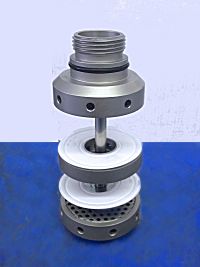
MicroPure is a leader in Segmented Filters. They use a sandwich technique to self-seal filter media between specially designed segments of stainless steel, once they are clamped securely with a tension rod that connects the end segments forming the cartridge.

Looking at the cut-out; air, gas, or liquids flow into the openings on the outside of a segment, They then pass through the filter material and into the next segment. The filtered air, gas or liquid then exits through the center of the filter and out of the filter housing.

Some key points of Segmented Filters

  • The number of segments and type of medium are determined by the application.
  • Each filter medium functions independently,
  • You can increase throughput by adding segments and filter media.
  • The cartridge can be disassembled and reassembled quickly and easily.
  • The two-way MicroPure design provides equal support for the filter media in both directions so you can reverse the flow if your application requires.

Monday, December 9, 2013

Industrial Knitted Tubing

I've been talking a lot about the traditional filters, those filters that attach to something, are part of something, are high tech, sterile, or so many other types of filters. However there's another filter that I'd like to add to my blog; Knitted Tubing.

Although knitted tubing may be part of the many other filters, such as the covering on pleated filters, it it one of those very simple designs that are completely versatile and inexpensive. Also called stockinette, knitted tubing can make your more advanced filters last longer by catching the large particles before they get to the fine filtration.

But that's not it! Here are some examples of other knitted tubing uses:
  • Chemical - chemical manufacturers use tubing to purify product throughout process
  • Fire Safety - flame retardant sleeves and cuffs as protective layers
  • Medical - non-sterile utility items
  • Filtration - filter bags, filter tubing, and filter covers
  • Paint - manufacturers use long filter bags to remove paint particulate before packaging
  • Paint spray booths - protective sleeve, cap, or skin cover
  • Manufacturing plants - use abrasion resistant sleeves to protect employees
  • Construction - use wide tubing to filter solids out of run-off
  • Automotive After Market - to protect parts in transit

Tuesday, September 10, 2013

Sludge Blowdown System

Sludge Blowdown System:

This tool is designed to monitor the time the Clarifier is in use. For example; when the pump that feeds the waste stream leading into the Clarifier, is turned on the timer is timing. After the predetermined time has elapsed, the controller will automatically open the discharge valve and activate the discharge pump to the sludge thickening tank, and then automatically turn off the pump and close the valve. The time elapsed is based on the clarifier, the waste water, and the sludge.

System includes: sludge valve, air valve and control panel with timers and cast iron diaphragm pump.

Click below to view a video of the process:
http://metchem.com/Air-Blow%20down%20Stage.avi

Thursday, August 29, 2013

Fullers Earth Estimation:

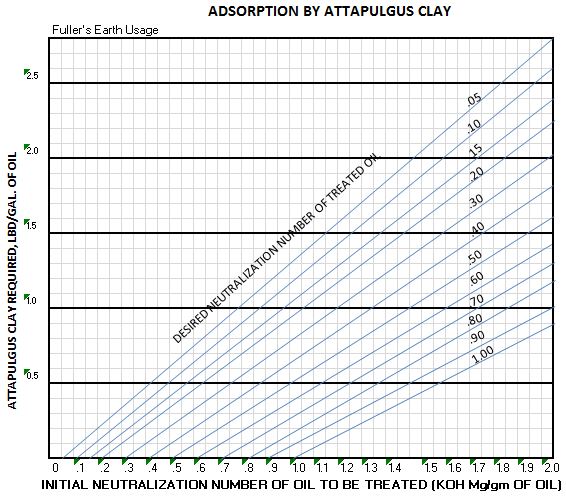
So how much? That's always the question they ask. But are you not sure how much Fullers Earth you need? We found this chart that estimates the amount of fullers earth by weight that is required per gallon of oil to be processed.

This handy chart provides a means of estimating the amount of fullers earth you need, by weight, all you need to know is the amount of oil to be processed!


What is Fuller’s Earth?

Fullers Earth is Activated Clay, commonly used to remove surfactants and additives from fuel oils including jet fuel, kerosene, and diesel. It also removes products of oxidation and acids from hydraulic and lube oils. Bulk Fuller's Earth can be used at airports, in refineries, transformer repair shops, and other industries.


Wednesday, August 28, 2013

What to do when your filter media is blinding and you can’t filter

In a perfect world filter cloth would hold the particles it's meant to filter and those particles would in turn help to filter the rest of the particles until the filter was full. However, that doesn't always happen. Sometimes the particles clog the material also known as "blinding the media". This results in your filter media no longer filtering.

There are a few reasons this might happen:

  1. The Media itself might not be a good fit for your application. The weave may be too tight, or too loose, the material might be the problem and a mono/multifilament might be the answer. For more information on material choice >>
  2. The media might need to be pre-coated prior to running the solution. The use of a porous "sludge" gets the media ready for the actual filtration of your media. To learn more about pre-coating >>
  3. Similar to pre-coating, a process called Body Feed may be used. This take a porous material and mixes it with the media being filtered. Acting similarly to the pre-coat, this added material keeps the media from blinding. Learn more about body feed >>
 Although this may give you some good ideas, it is always best to consult an expert to help solve your filtration needs.

Monday, August 26, 2013

Sterile Gas Filters

Why you need sterile gas filters

To reduce batch contamination, spoilage and product loss, effective sterile gas filtration is a necessary part of your process. Especially important in the food, beverage, and pharmaceutical industries, sterile gas filtration protects your product from harmful submicron particle contamination and bacterial transfer or growth.

MicroPure Segmented Filters feature a patented design that offers significant advantages over conventional filter cartridges.

The results are unquestionable: MicroPure Segmented Filters, designed for two-way flow, ensure consistent, uncompromised security for any application.

Mini Filter Series

If you have a small application or a small budget the Mini Filter Series might be the solution to your filtration needs. The same great quality and exceptional features at a lower cost to you.

Click here for Sterile Air Mini Filter Series information >>

Thursday, July 18, 2013

A Sketch of Polypropylene Textile Cloths

This is from our good friend Walter Senney, Met-Chem Group President

Although there are a lot of fibers to choose from, one of the most popular fibers used in manufacturing fabric today is polypropylene.

This versatile fiber can be woven into a variety of thread counts to allow from loose to tight filtration applications. It is good for use in temperatures from 50°F to 180°F  - Specification charts sometimes show it being use up to 250°F! However, Wally said he "would not recommend it" unless it was under specific circumstances.  Another benefit of polypropylene is it's acceptable pH can range all the way from 2- 12! Another major thumbs up  Polypropylene can be woven into a variety of cloth and cloth types allowing users to filter out the water or the baby!

Here's a little more information http://www.lamports.com/A-polypropylene.html

Or contact Lamports directly for assistance.

http://www.lamports.com/
Phone: (216) 881-2050
eMail: info@lamports.com
 

Monday, July 8, 2013

Fuller’s Earth 30/60 Clarification Aid:

Fuller's Earth 30/60 Clarification Aid is a granular aluminosilicate used in packed bed applications for the clarification of liquids. This material is mined and processed to provide maximum surface area and chemical adsorptivity.

Performance, Benefits, and Features

  • This has excellent particle strength resists attrition, lowers dust, and prevents plugging
  • Saves money with low bulk density by filling towers with less weight
  • Consistent particle size, load after load
  • Quality Assurance Program ensures performance standards
  • All materials are high-quality, LVM grades manufactured to precise size specifications
  • LVM granules offer the highest chemical activity available

Suggested Processing Applications

Fullers Earth 30/60 Clarification Aid is used in applications from small cartridges to large towers, to remove unwanted contaminants in a variety of fixed bed.
 
Applications include:
  • Dry cleaning solvents.
  • Removal of surfactants and water from jet fuel.
  • Dielectric oil used to insulate commercial transformers.
  • Industrial processing chemicals and solvents.

For more information contact Jaxon Filtration:
Telephone:
Toll Free:
706-675-3996 
888-780-3568
Fax:
706-675-3787
e-Mail:
sales@jaxonfiltration.com

Tuesday, June 11, 2013

Selexsorb - alumina-based adsorbent material

Selexorb is a promoted alumina-based adsorbent material formulated to remove trace contaminants for refinery production.

Uses and features for Selexorb:
  • Highly efficient at removing many contaminants from olefin containing streams
  • Complete system solutions for treatment of off-gas streams from catalytic crackers and acetylene producing units
  • Long lifetime, easy operation, and physical hardness and durability
  • Does not release minerals that can promote sludge and gels within the reservoir.
Selexorb Applications:
  • Used for filtering synthetic oils.
  • Used in various aspects of olefin production and refineries.
  • Purifies Olefins, Aliphatics, gases, feed stocks for Alkylation, MTBE, TAME, and BTX units.
  • Removes COS, H2S, CS2, CO2, H2O, NH3, Mercaptans, Sulfides, Disulfides, Thiophenes, Oxygenates, (Alcohols, Aldehyhdes, Ketones, etc.), Amines, Amides, Nitriles, Organosilicates and Arsine.
 

Thursday, January 31, 2013

Micropure Filtration

Specialized Sterile Gas, Sterile Air, Culinary Steam, and Liquid Filtration

We are happy to help with any of your filtration needs, whether it be air, gas, liquid or solids. If you would like more information about our products or current prices, Please contact by phone or email using the information below. A MicroPure trained representative will be glad to answer all of you questions. You will receive a detailed analysis of your current filtration system security and the return on investment you can expect with MicroPure Segmented Filters. There's no cost or obligation. We look forward to hearing from you.
For more information, current pricing, or the name of the nearest MicroPure representative, please call, fax, or e-mail us.
 
Address:
777 East 82nd Street
Cleveland, Ohio 44103
Phone:
(952) 472-2323
Toll Free:
(800) 654-7873
Fax:
(216)361-0500
email:
tsenney@micropure.com